Freediving presents a unique paradox. The most critical skills appear so simple that their difficulty often surprises new divers. True mastery lies not in spectacular feats of endurance but in refining these foundational techniques. Here, we analyze the 7 core freediving skills where subtlety triumphs over strength, and why competence in them defines a proficient freediver.
1. The Duck Dive
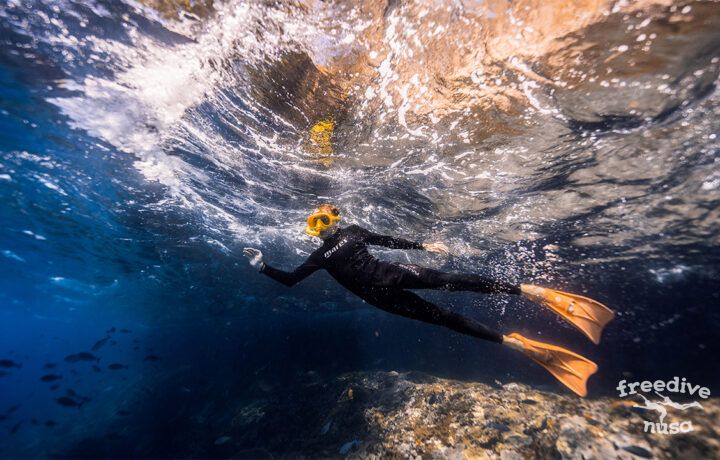
The initial submersion sets the tone for your entire dive. An inefficient entry, characterized by excessive splashing and leg-driven propulsion, wastes energy and oxygen. The expert duck dive is a hydrodynamic maneuver. It uses the body’s weight and a precise, full-body articulation to redirect horizontal momentum downward. The goal is to transition through the surface with minimal drag, converting effort into depth, not turbulence. It’s the first lesson in the freediving axiom: economy of movement is economy of oxygen.
2. Equalization
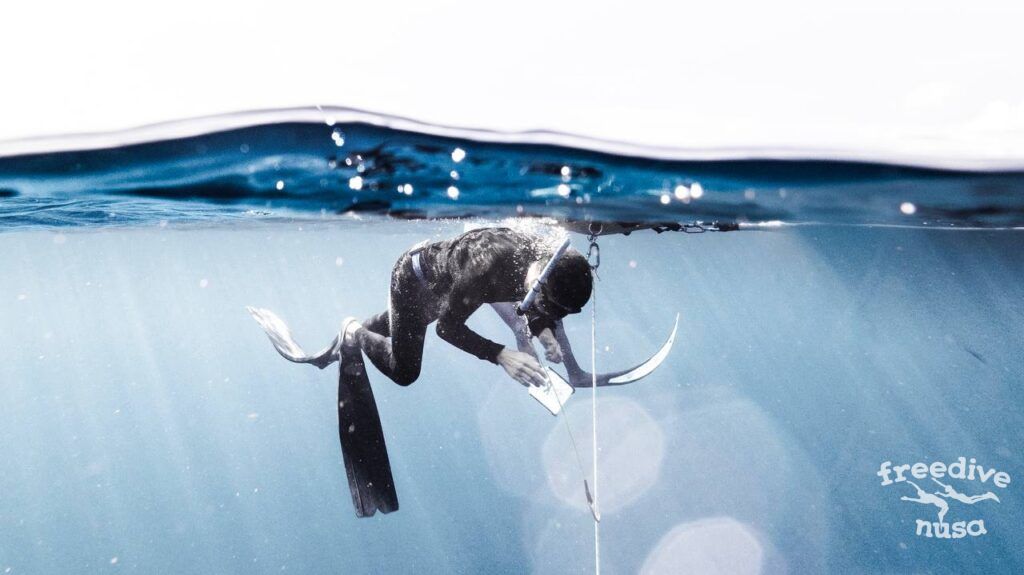
Many view equalization as a basic, one-time technique. In reality, it’s a dynamic process that evolves with depth. The Valsalva maneuver (pinching the nose and blowing) becomes ineffective beyond shallow depths. This necessitates a shift to more advanced techniques like Frenzel, which uses the tongue as a piston, or the Mouthfill method for greater depths. The challenge is physical and cognitive: performing these techniques reliably while inverted, under pressure, and managing other dive tasks. It’s a skill that demands constant practice and refinement. That’s why we offer a dedicated Equalization Workshop – to help freedivers develop reliable technique through targeted drills and personalized feedback.
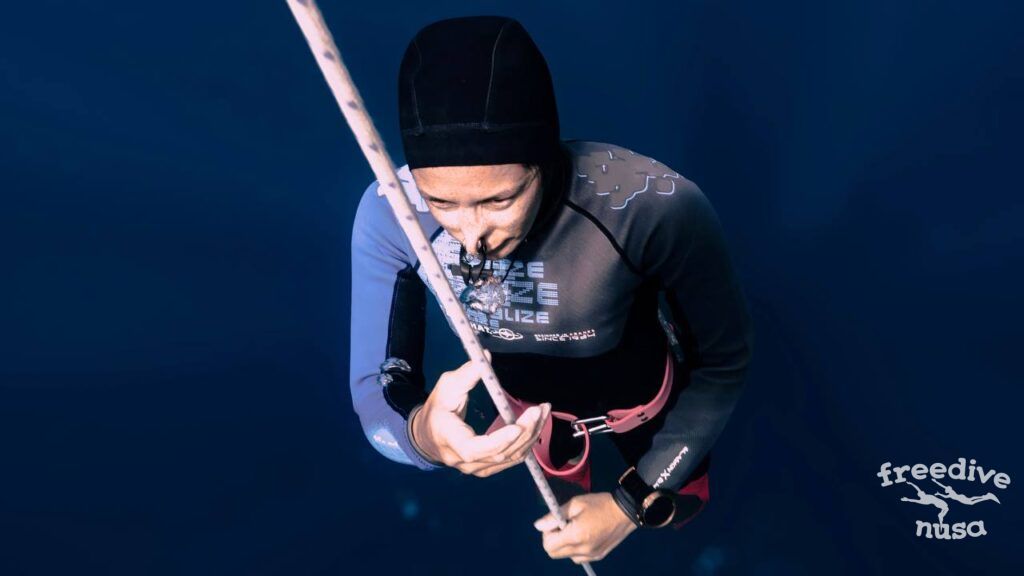
3. Finning in Long Fins
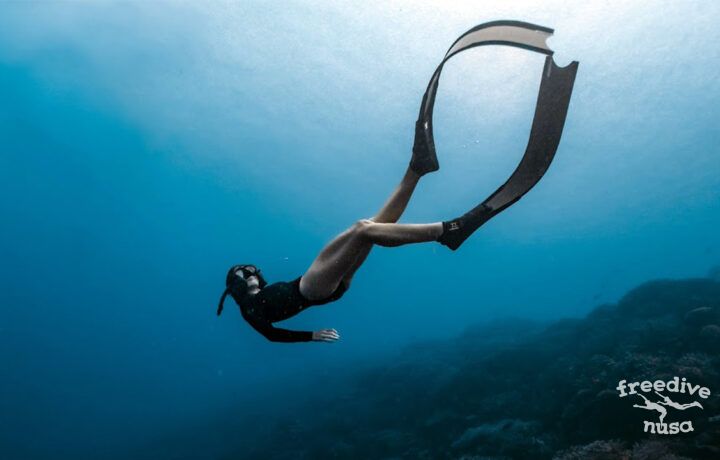
The long fin is a tool that amplifies both good and bad technique. Inefficient “bicycle” or “scissor” kicks originate from the knees, creating disproportionate vertical movement and drag. Effective finning is a hip-driven motion. Power initiates in the core and glutes, transfers through relatively straight legs with relaxed ankles, and expresses as a fluid, symmetrical “whip” from the fin blade. This technique maximizes forward propulsion per unit of metabolic cost, a critical factor in extending dive time and comfort.
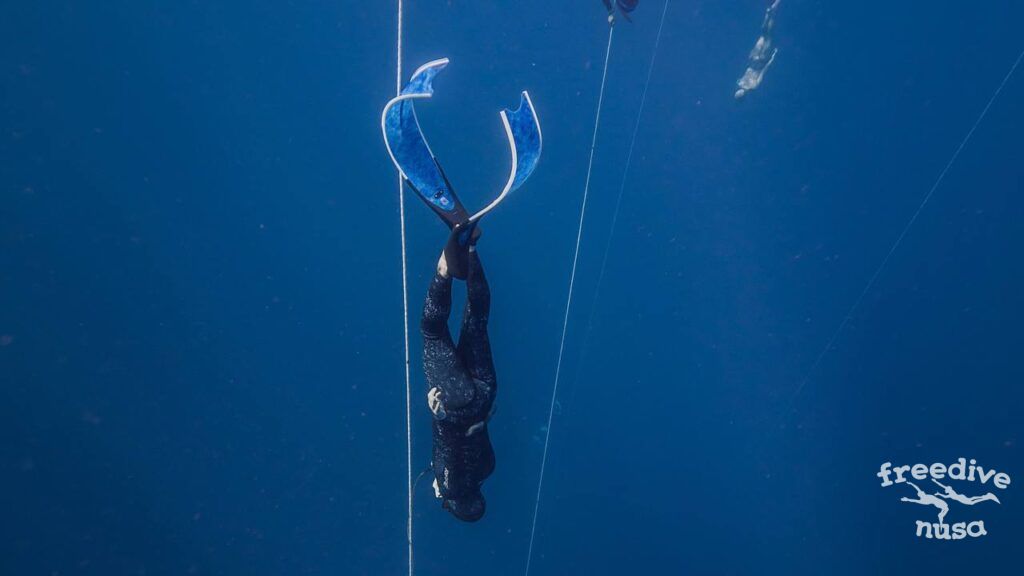
4. The Freefall
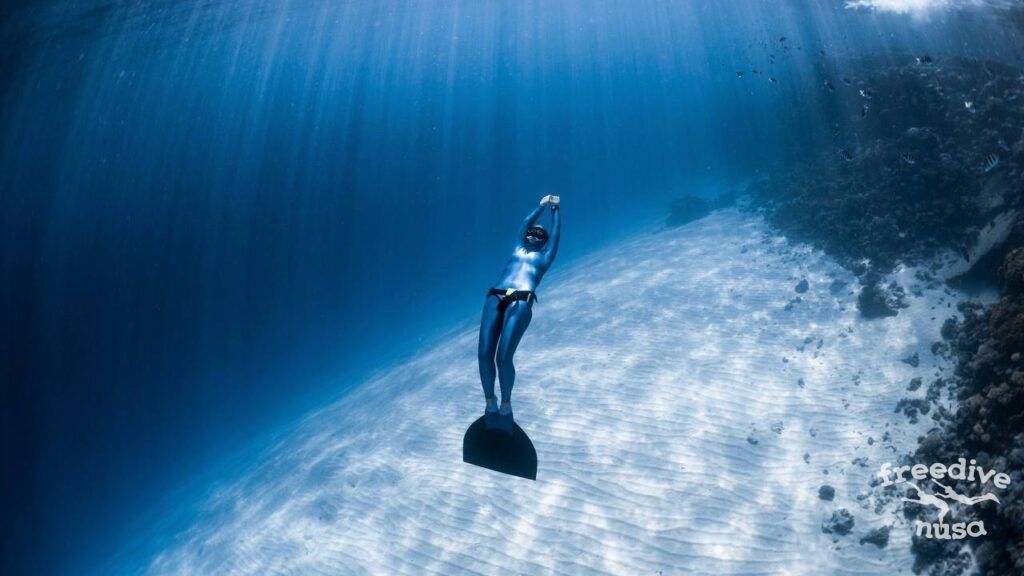
Freefall is not passive sinking. It is an active state of streamlining achieved when neutral buoyancy turns negative. The body must be arranged to minimize drag: spine neutral, head in line, arms positioned, and legs relaxed. Any tension, like hunched shoulders, arched back, or bent knees, increases hydrodynamic resistance and halts the descent. Achieving freefall is a lesson in body awareness and relaxation under compression. It is the art of descending by removing obstacles, not by adding force.
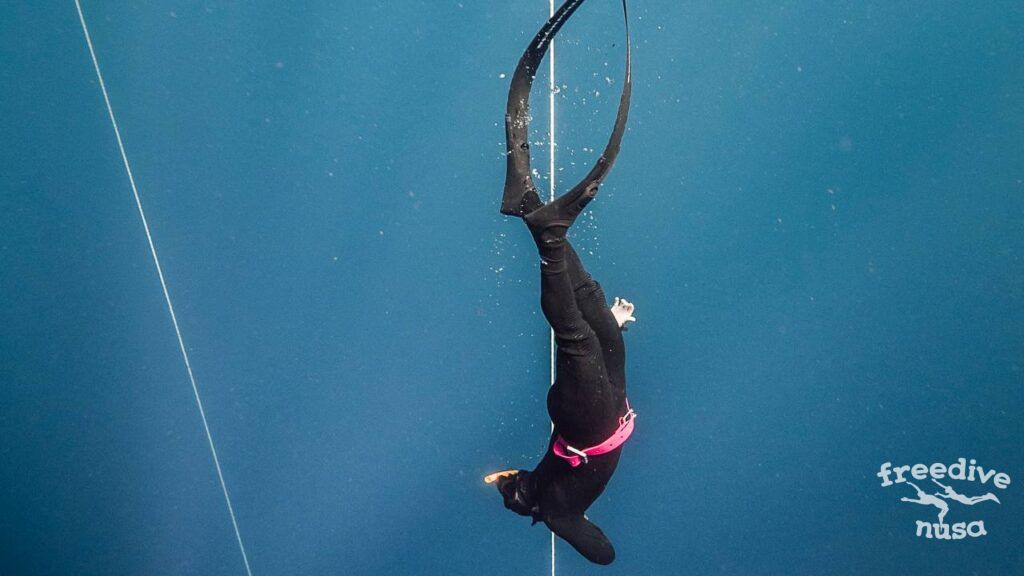
5. Static Apnea
While performed statically, this discipline directly translates to dynamic and depth diving. The primary challenge is not physiological, but neurological. The urge to breathe is triggered by rising CO₂ levels, leading to involuntary diaphragmatic contractions. Freedivers learn to observe the discomfort without triggering a stress response. This cultivates the calm, observational mindset required to manage similar sensations at depth, where panic is the greatest risk. This is precisely the skill set we train in our Static Apnea Workshop: learning to stay calm and observe the urge to breathe, so it feels familiar and manageable when it happens at depth.
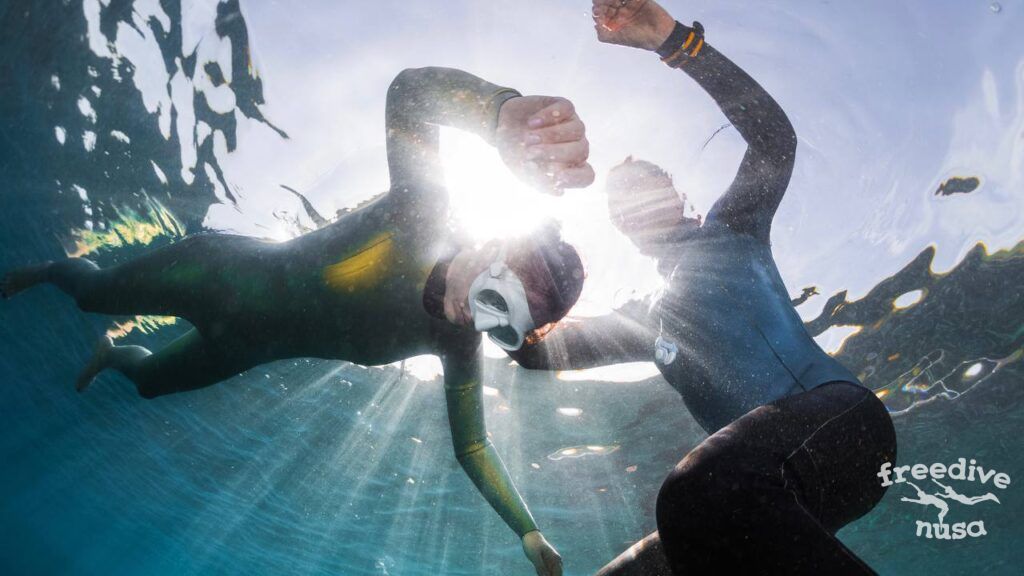
6. Monofin Technique
A monofin operates on the principle of undulatory propulsion. Incorrect use, characterized by leg-dominant kicking, is exhausting and ineffective. Proper technique generates a wave that begins in the upper torso, amplifies through the hips, and transmits energy through the legs to the blade. The knees act as flexible joints in this wave, not independent hinges. When executed correctly, the freediver and fin move as a single, efficient unit, offering unparalleled propulsion with remarkably low perceived effort.
7. The Bottom Turn
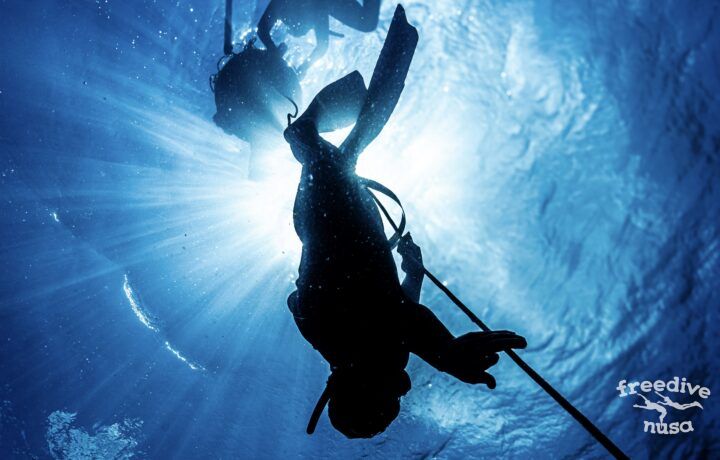
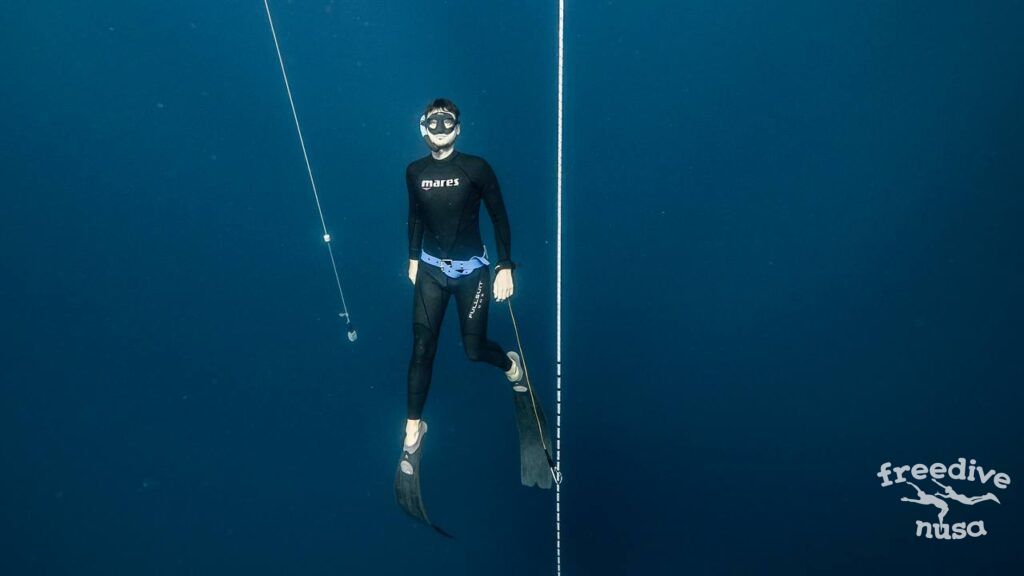
At depth, where pressure is greatest, and narcosis is possible, efficiency is paramount. A poorly executed turn (too wide, too hurried, or unbalanced) wastes valuable energy and can disrupt relaxation. A proficient turn is a controlled, hydrodynamic pivot. It uses minimal contact with the line (if used) and maintains the body’s streamlined profile. This maneuver conserves momentum, redirecting it smoothly into the ascent. It is often the difference between a controlled, pleasant return and a stressful, oxygen-depleting climb.
Progress in freediving follows a counterintuitive path. Initial gains come from adding strength and effort; advanced mastery comes from subtracting unnecessary movement and tension. These seven skills form the technical and psychological framework of the sport. Mastering them requires patience, mindful practice, and an acceptance that in freediving, what looks easiest is often the most profound challenge. The water doesn’t reward force; it rewards finesse, awareness, and respect for its fundamental physics.
We invite you to experience this approach firsthand in our coaching sessions, where an instructor will work with you to refine these skills and deepen the understanding of your body underwater.